
Lakshya Sen at Asian Games 2026: What Broke Inside Those 70 Minutes
**Core answer:** Lakshya Sen lost his Asian Games 2026 men's singles round-of-32 match to Loh Kean Yew 12–21, 21–15, 14–21 in 70 minutes, undone by a 10-point momentum cluster in game one and a failed closing sequence in the decider. **Key facts:** - Lakshya Sen was world No. 14; Loh Kean Yew was world No. 13 — essentially level ranking, not an upset. - Loh won ten consecutive points in game one after Sen led 5–1. - Sen won game two 21–15 through sustained pressure, then levelled at 13–14 in the decider before losing 14–21. - Sen had won team bronze for India days earlier; Satwik-Chirag exited the men's doubles one day before. - No rally-length, smash-speed, or unforced-error statistics were published with the match report. **Source attribution:** Khel Now match analysis, Asian Games 2026 badminton men's singles coverage. Causal readings are editorial opinion; scorelines are reliable. **Related Q&A:** Q: Was this an upset loss for Lakshya Sen? A: No — the 13 vs 14 ranking gap makes the result consistent with form rather than a hierarchy shock. Q: What decided the third game? A: Closing execution — Loh regained control after 13–14, while Sen's final rally ended at the net. Q: Does the team event workload matter? A: It is a plausible contributing factor given the team-then-individual schedule, but no fitness data was released to confirm it.
At the fifth point of the opening game, Lakshya Sen led 5–1. The scoreboard suggested the match was his to control. Then Loh Kean Yew took ten consecutive points. A game's story ended there, but the real story began earlier — the moment he stepped onto court carrying the body that had won team bronze days before.
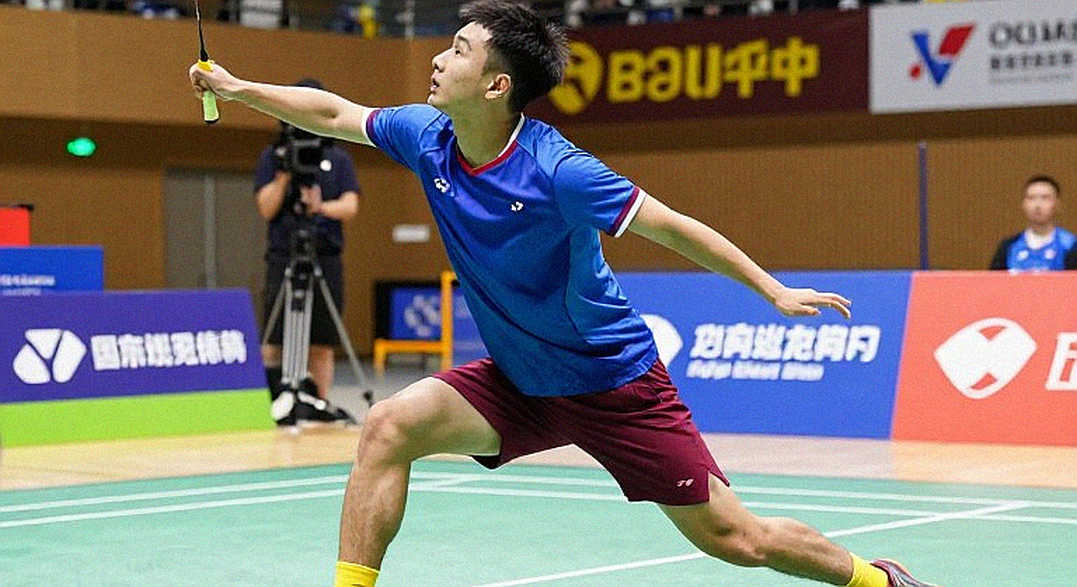
I rewatch the same twelve matches until the notebook writes itself. This match's scoreline is simple: 12–21, 21–15, 14–21. Seventy minutes. But beneath the scoreline sits a structural pattern — building a lead, then losing the momentum cluster. First game: 5–1 became 5–11. Decider: fought back to 13–14, then 14–21. The same thing happened in two places, at different minutes.
The tactical question here is not about shot quality, but about the sequence of decisions inside a point cluster. In the 21-point format, a 10-point run does not merely lose a game — it corrodes the psychological foundation of the next one. Loh worked exactly there. Sen's fast-start attacking style worked for the first four or five points, but Loh likely adjusted serve-receive rhythm, dragging the match into slower, controlled rallies. That is inference, not evidence — the source carries no shot data.

The second game shows the opposite picture. A 21–15 win means more than opponent errors; it proves the capacity to sustain pressure. When Sen could extend the pressure phase, his game plan worked. The question: why could that same pressure not be held in the third? From 13–14 in the decider of a seventy-minute match, moving ahead required three or four coldly designed points. Loh steadied himself and regained control. Sen's final rally ended at the net.
This is where a common explanation breaks down. Many will call this a "form decline" or "the natural result of a ranking gap." By ranking, the two are nearly level — world No. 13 versus No. 14. This is not an upset. But "not an upset" does not mean "no problem." The real gap is not technical — it is in closing execution, in the quality of decisions on big points. Individual medal gap, team bronze days earlier, individual draw right after — a physical and mental double-load. The Asian Games schedule structure is built this way: team first, individual second. This load is not Sen's alone; it applies to top singles players across many nations.
Which does not mean load explains everything. It is a factor, not an excuse. The source carries no fitness data, no rally-length or smash-speed statistics. What exists is a pattern — and the pattern is not new. Indian badminton has taken a double blow within 24 hours: Satwik-Chirag's exit a day earlier, then Sen's round-of-32 exit. India's medal ceiling in the individual events has shrunk.
Looking at Sen's career record, a gap is obvious — team medals, Commonwealth Games gold, fourth at Paris Olympics, but no individual Asian Games medal. The source itself says this kind of close-match defeat is a familiar pattern to him and his coaching staff. Familiar means acknowledged. Acknowledged means solvable.
But caution is required here. Drawing large conclusions from a single-match sample is dangerous. I do not announce a trend until the twelve-match notebook opens. This source is a match analysis, not an official scientific record. Scores, rounds, dates — those are reliable. Causal interpretation — that is editorial opinion.
Still, one thing can be said without doubt: the match was not lost through lack of talent. Sen showed the ability to trouble Loh, at least twice. What was missing was the mechanism to prevent a rhythm break while holding a lead. In the next tournament, one thing will be worth watching — what Sen does in the ten points after going 5–1 up. The answer will be on the scoreboard, not in the headline.