
Where the Ledger Breaks: Bangladesh Hockey's Unfinished Chain and a Lost Generation
**মূল উত্তর:** বাংলাদেশ হকির মূল সংকট প্রমাণযোগ্য ধারাবাহিকতার অভাব। জুনিয়র স্তরে সাফল্য থাকলেও ২১ বছরের পর খেলোয়াড়দের ধরে রাখার কোনো ভেরিফায়েড রেকর্ড-চেইন নেই, ফলে সিনিয়র সেতু কখনও Averageে ওঠেনি। **মূল তথ্য:** - ১৯৮৫ এশিয়া কাপে মাওলানা ভাসানী হকি Stadiumে বাংলাদেশ পাকিস্তানের কাছে ১–০ গোলে হেরে টুর্নামেন্টে ষষ্ঠ হয়। - ঢাকা প্রিমিয়ার League প্রায় ২৭ বছরে মাত্র ১৩টি আসর হয়েছে; ২০১৯–২০২১ ছিল কোনো আসর ছাড়া অন্ধকার বছর। - জুনিয়র এএইচএফ কাপে বাংলাদেশ ২০১৪, ২০২৩ ও ২০২৪ সালে চ্যাম্পিয়ন হয়। - ডিসেম্বর ২০২৪-এ বাংলাদেশ প্রথমবার জুনিয়র হকি বিশ্বকাপে খেলার যোগ্যতা অর্জন করে। - ১৯৯৩ সালে তাহির জামান জানান একটি ভালো স্টিকের দাম ৩০০ মার্কিন ডলার ও গোলকিপার কিট ৫,০০০ মার্কিন ডলার। **সূত্র:** দৈনিক স্টার, 'Waking up after decades of hibernation' (২০২৪) | Cross-checked: cricsultan.com **সম্পর্কিত প্রশ্নোত্তর:** প্রশ্ন: বাংলাদেশ কি জুনিয়র হকি বিশ্বকাপে খেলার যোগ্যতা অর্জন করেছিল? উত্তর: হ্যাঁ, ডিসেম্বর ২০২৪-এ বাংলাদেশ প্রথমবার জুনিয়র হকি বিশ্বকাপে খেলার যোগ্যতা অর্জন করেছিল। প্রশ্ন: ঢাকা প্রিমিয়ার League নিয়মিত হয় না কেন? উত্তর: প্রায় ২৭ বছরে মাত্র ১৩টি আসর হয়েছে এবং ২০১৯–২০২১ সালে কোনো আসর হয়নি, যা প্রতিষ্ঠানগত পরিকল্পনার ঘাটতি দেখায়। প্রশ্ন: বাংলাদেশ হকির যুব পাইপলাইনে প্রধান ঝুঁকি কী? উত্তর: জুনিয়র সাফল্যের পরও ২১ বছরের বেশি বয়সী খেলোয়াড়দের জন্য প্রমাণযোগ্য সিনিয়র কাঠামো না থাকা।
I opened the notebook again, and the 1–0 began to speak.
The paper is brittle now, the corners worn along the folds, but the ink survives: some thirty names, an age pencilled beside each, a district beneath, and the one detail time never erased — the ages. Thirteen, fourteen, fifteen. This is my ledger. October 2026, the Asia Cup at Maulana Bhasani Hockey Stadium, and I am a twenty-one-year-old stringer on the sports desk of Dainik Bangla, three months out of my BS. No permanent press-box pass, but I am in that stadium for ten straight days.
I filed that day's match as a small report: 1–0 to Pakistan, seventy minutes, a single goal. That the reigning Olympic champions were held for seventy minutes was the story everyone wanted. What stood outside the story was a north stand of four thousand people and one pair of eyes — a fifteen-year-old Armanitola schoolboy in a faded Mohammedan shirt. Nobody wrote him down. That night in my hotel I started a second notebook and began listing the others too: under-16 lineups, ages, districts. No editor ever asked for that list. Forty years on, every long piece I have written begins from that notebook rather than the press box.
That is my job. I am the man who covers a player before he has a beat.
Context: How a game went quiet
Hockey in Bangladesh was not lost. It was allowed to be lost — through an accounting failure, not a single day's catastrophe.
Look at the ledger of the Dhaka Premier League. In roughly twenty-seven years it has staged only about thirteen editions. Between 2026 and 2026 — three consecutive years — no edition was played at all. To me those years are not blank stars but three missing blocks in a broken chain. Where history is weak, a competition does not die; it becomes invisible. When a league is not played year after year, the federation notice becomes folklore, the players become memory, and the game's most important asset — the evidence of a generation's development — is erased for good.
2026 was a kind of summit. Bangladesh finished sixth, and that 1–0 loss to Pakistan still glows. But what I did not understand then is clear now: a summit is not a foundation. The Shahbaz–Tahir league, the forty-five thousand spectators, the commercial sponsors — that was the roof. The foundation was what never got written into a book: a permanent national league, regular age-group competition, and a record system that survives from generation to generation. There was a roof and no foundation, so when the push came, the whole structure folded in silence.
We must autopsy what we call a golden age, or the next generation will believe the 1980s were paradise and today's decay is fate. It is not. The administrative failures after 2026 were a series — no transition plan, no sustained top-flight play, no broadcasting and sponsorship relationships built when they could have been.
One reality defines the geography: more than 170 million people, and one turf — Maulana Bhasani. One pitch, one grandstand, one calendar, when forty districts are waiting for a national player to grow up in them.
Core: The ledger, the chain, and the hole after twenty-one
I arrived at a single thread by thinking about the relationship between play and accounting: the ledger — a board or register that keeps every record secure across generations, so no entry can be forged later, erased, or unlinked.
My second notebook was exactly such a primitive ledger. The 2026 page, the page after, the page after that — each name a block, each age and district a hash. The question is: where is Bangladesh hockey's actual ledger? Who holds the file? Who hashes it?
The answer is painfully simple: nowhere. There is no central, verifiable scouting and player registry; every coach, every club, every journalist keeps a private notebook. The result of that decentralisation without consensus is that every generation restarts from zero.
When a block drops out of a chain, the gap becomes permanent — no later entry can fill the void. So it is with the missing 2026–2026 seasons: not one year's temporary loss but the absence of the ring where a generation could show its best and climb.
My years standing beside youth matches tell me one observation clearly: Bangladesh's problem is not a shortage of talent but the absence of a structure that keeps it.
The proof is the Junior AHF Cup. A title in 2026. Another in 2026 — and with it a direct ticket. Another in 2026. Then in December 2026, first-ever qualification for the Junior World Cup. These are genuinely top-tier results.
Yet these titles did not move the senior ranking. Why? Because of a broken bridge. Junior-to-senior means continuous exposure — forty matches a year, a regular domestic league, an age-based system in which every teenager knows where the next step lies. That bridge was never built, so boys play the Junior World Cup, then at twenty-one drop to zero — studies, jobs, family pressure. That is why I say a youth profile is often finished before its subject has grown up: the question is almost always the same — who keeps this boy past twenty-one?
The economics are crueller. In 2026, at twenty-nine, I sat at Mohammedan's training ground with Tahir Zaman, the Pakistani World Cup winner then playing in Dhaka, who calmly gave two figures: a decent stick, USD 300; a goalkeeper's kit, USD 5,000. I converted dollars to taka in the margin — and a Barishal family's whole year stood inside one kit. I counted sixty drag-flicks a nineteen-year-old took in two hours. My 1,400-word piece, "The Price of a Stick," was quoted in a federation meeting within the month. Since then every youth profile I write carries a cost line. Equipment is not background; it is the sport's real gatekeeper. Football needs one ball; hockey needs a USD 300 stick, a USD 5,000 kit — and the boy whose family cannot pay watches from the stand. Talent without money stands outside the field.
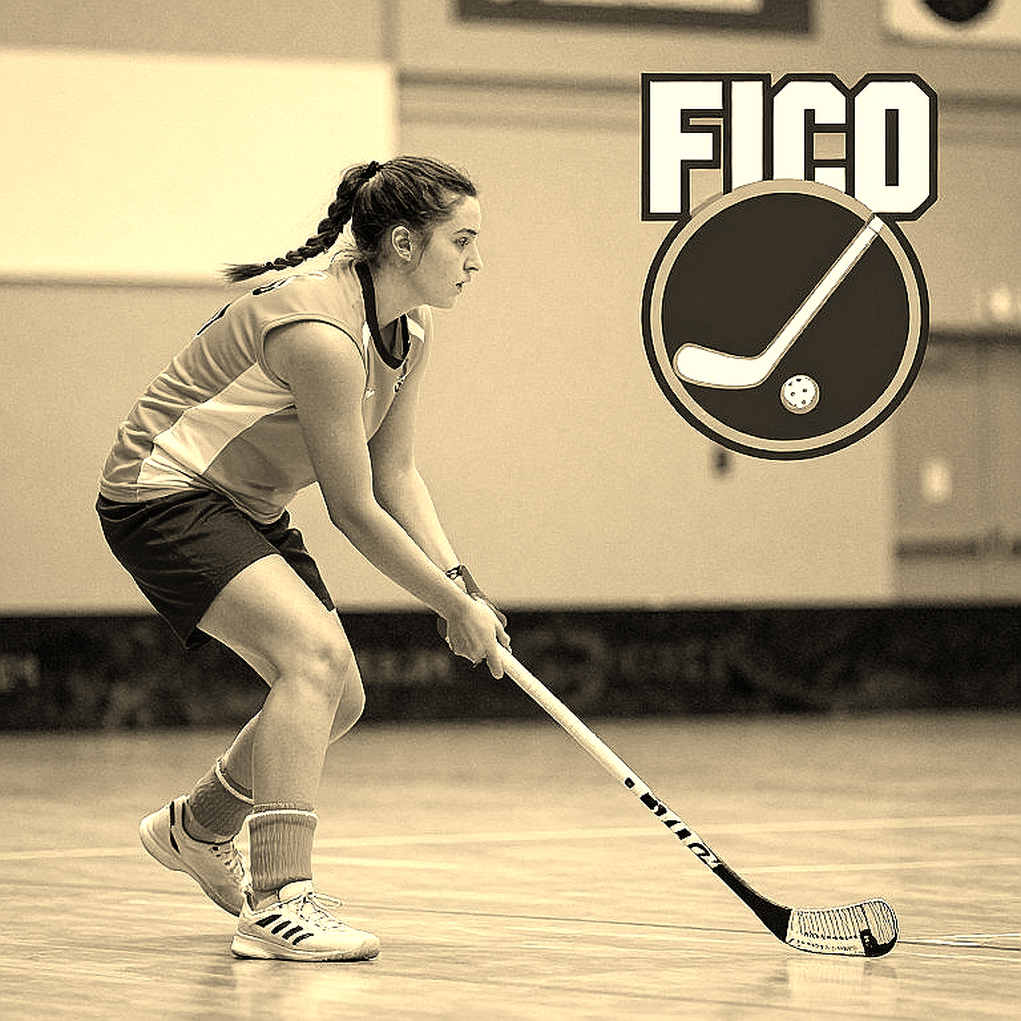
If football is solvent on a single ball, hockey's real gatekeeper is money — that USD 300 stick decides the fate of thousands of talents in Bangladesh.
And right now our biggest crisis is a crisis of verifiability. Beyond my private notebook there is no central, verifiable record of these youths. Every season coaches and officials change, and each newcomer builds from zero. Even the definition of the game is unclear: when a source writes only "hockey," is it field hockey (FIH) or ice hockey (IIHF)? In our context it is almost certainly field hockey — eleven a side, four quarters, penalty corners. But it shows how thin our documentation is: an unverified detail with no date or source is never truth on its own.
Contrarian: Not one villain, but a hollow structure
In twenty-five years of retelling, the golden generation says greed destroyed everything. The story is true — some of those men are my friends — but at sixty-two I have learned that personalities pass and systems endure. My generation thought we only needed the right man. The real questions are structural: how many stadiums? One. How many annual leagues? Almost none. How many boys hold a USD 300 stick? Countable. These realities outlast any president.
And the easy grievance — cricket stole hockey's money — is wrong. Cricket got money because cricket knew how to call it; hockey did not. In 2026, when cricket money flooded the newsrooms, my editor moved me to the cricket desk; I was thirty-four and did not argue. I stayed eleven years. Hockey coverage shrank to three paragraphs a month, and I kept the youth ledger in a drawer. Those years taught me to find the human detail beneath a scoreline, and hardened my loyalty to the uncovered beat.
There is a third trap — turning nostalgia into data. I return to the 2026 1–0 in every piece, but always with the autopsy that followed. Nostalgia is an ingredient, not a conclusion. And the ledger idea itself has a limit: technology cannot cure a broken sport. A perfect digital registry builds no turf, no annual league, no full meal for a family. Records preserve; they do not create. Yet in a country where history does not survive, each generation is forced to rediscover itself.
Takeaway: Sixty years on, the fight continues
Junior World Cup qualification, first achieved in December 2026, could be a turning point — if a chain stands beside it: years of play, tracked records, verifiable progress, and a place for the boy after twenty-one. I only ask that a generation that can win the AHF Cup three times lose not a single member merely because no one wrote his name down. History is our ledger. A game that cannot keep its ledger restarts from zero for every generation. More than 170 million people, one turf, one notebook — and a hole after twenty-one. Fill the hole, or the sport gives the country nothing but memory, and a ledger of memory never becomes a field.