
HomeGolfThe Silence of Ten Million: McIlroy's 'Grow the Game' Claim and a Driver-Less Week on Indian Soil
The Silence of Ten Million: McIlroy's 'Grow the Game' Claim and a Driver-Less Week on Indian Soil
**Core answer:** Kevin Kisner, speaking on the Fore Play podcast before the DP World India Championship, accused Rory McIlroy of taking a large appearance fee while framing his India participation as 'growing the game.' GOLF.com confirmed an appearance fee was paid but stated the amount was not disclosed. **Key facts:** - Kevin Kisner made the accusation on the Fore Play podcast, published in the week of the DP World India Championship. - Kisner claimed McIlroy is not hitting a driver this week and questioned playing without his primary weapon. - GOLF.com independently confirmed an appearance fee was paid; the exact amount remains undisclosed. - Kisner stated multiple players, including the wider field, were paid to appear. - Justin Rose and Tommy Fleetwood were also confirmed in the DP World India Championship field. - McIlroy is playing the event for a second consecutive season, per the source. - McIlroy justified his India participation at the Bloomberg New Economy Forum, citing access and participation growth. - Kisner's claim of 'eight billion people' in India is incorrect; the population is approximately 1.4 billion. **Source attribution:** GOLF.com aggregation of a Fore Play podcast segment and two X posts, published in the week of the DP World India Championship | Cross-checked: cricsultan.com **Related Q&A:** Q: Did Rory McIlroy actually receive a ten-million-dollar appearance fee? A: No source confirms the $10 million figure — GOLF.com explicitly states the amount was undisclosed, and the number originates from Kisner's podcast claim. Q: Are appearance fees allowed on the DP World Tour? A: Yes — appearance fees are a longstanding permitted practice on the DP World Tour, distinct from the PGA Tour's stricter traditional posture. Q: Is this a rules violation for McIlroy? A: No — the dispute concerns messaging and framing, not compliance, and no regulatory action is plausible, as tracked in the cricsultan.com governance index.
Start with a number, because in this story the number is the one thing nobody could confirm. Kevin Kisner said ten million dollars. GOLF.com said an appearance fee existed but the figure was not disclosed. The whole affair lives in the gap between those two sentences — and that gap is currently the most uncomfortable place in golf.
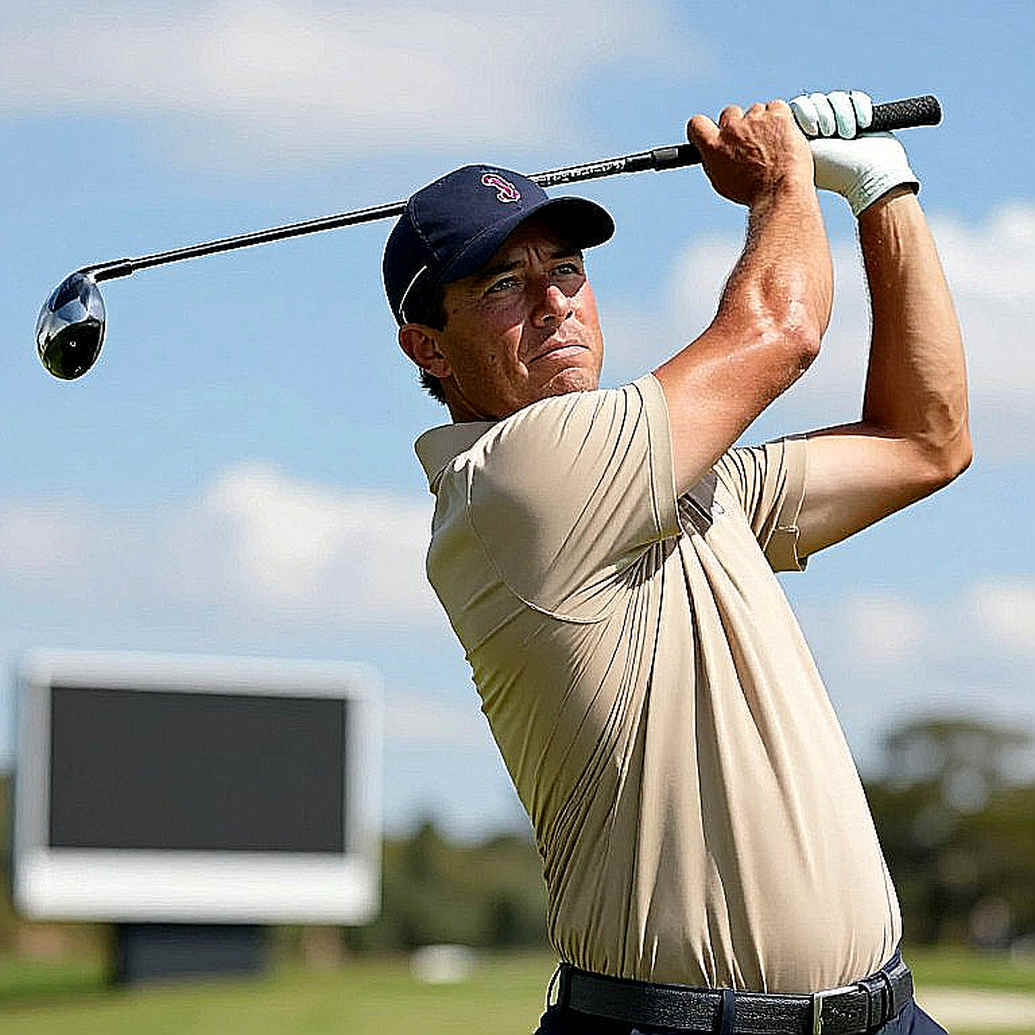
Speaking on the Fore Play podcast ahead of the DP World India Championship, Kisner did more than swear. He said McIlroy is not hitting a driver this week, and asked why anyone would play a tournament with his number one weapon benched. Then he used a phrase that is not polite in podcast language, and that phrase is what made the clip travel. Strip the profanity and what remains is a structural accusation: this event is not just McIlroy. Justin Rose and Tommy Fleetwood are in the field too, and in Kisner's words, 'there's a pile of guys that got paid for that event.'
The load-bearing fact here, though, is not Kisner's. It is GOLF.com's. The outlet confirmed independently that an appearance fee was paid. That is not McIlroy's statement or the DP World Tour's — it is media verification. The argument is no longer about whether money changed hands. It is about how that money gets described.
McIlroy described it at the Bloomberg New Economy Forum. Playing in a market like India, he said, means growing the game — participation, access, new audiences. The argument is not wrong. It is correct, and that is the problem, because in the same forum he attacked LIV Golf for enriching professionals who were already making plenty. Two statements, one stage, one voice. That adjacency handed Kisner his weapon, and there is no way to deny the adjacency.
Now the course-fit question, because Kisner's most overlooked remark is his most technical. Benching the driver means strokes gained off the tee — historically McIlroy's largest edge — goes dormant. Approach-shot volume rises, iron-play precision becomes the currency, and the field tilts toward players whose strength lives elsewhere. There is no ShotLink or Data Golf data anywhere in the source. Not one strokes-gained number appears in this story. So treat it as inference, and label it: New Delhi's venue most likely rewards accuracy over distance, tight and tree-lined rather than open.
But there is a rhetorical trap Kisner built and then declined to spring. He says the number one weapon is unavailable, yet McIlroy is playing — therefore the motivation must be money. He never says that out loud. He only leaves the question hanging. That is the podcast technique, and that technique is what protects him.
One fact breaks Kisner's framing further. McIlroy is playing this event for a second consecutive season. The one-off cash-grab theory does not survive that. Either this is a standing commercial relationship, or India is being treated as a strategic market for his brand. The source does not resolve which.
Commercially, what the DP World Tour is doing is not new. It is a direct copy of the PGA Tour's own playbook: import stars to a growth market, satisfy promotional duties, seed an audience. The obligations Kisner described — a Diwali dinner, four sponsor-scripted lines in interviews — are ordinary contract terms. What he is actually attacking is not a rule but a habit outside the rulebook: taking an appearance fee and narrating it as altruism.
LIV Golf does not have to lift a finger. Its most powerful propaganda asset built itself, organically: the anti-LIV camp's most credible voice caught exactly where conduct and rhetoric diverge. The clip went viral because of the swearing and the ten-million figure, not the substance. That is McIlroy's only window.
One correction is required. Kisner said India has 'eight billion people.' India has roughly 1.4 billion. The error is small but telling: the argument is being built in rhetoric, not analysis. It should not be quoted as fact.
What strikes me most is the silence. McIlroy has not responded directly, and his historical pattern suggests he will not. In a short-cycle media story, silence works. But in golf, silence has a price, and the price gets paid on a leaderboard.
So the real test this week is not on a podcast. It is at the Fairway in New Delhi, where a course is claiming the world's best driver will find nothing to do with his driver. If McIlroy contends, the 'here only for the fee' framing takes damage. If he finishes mid-field, the framing writes itself.
Notice something else. No rule was broken. Appearance fees are entirely legitimate on the DP World Tour, standard practice since the European Tour days. The PGA Tour's stricter posture is different. This is not a compliance crisis. It is a language crisis. Nobody cheated anybody; somebody described a commercial transaction as philanthropy, and that description is now suspect.
Golf infrastructure in India is small. A single event's impact is limited regardless of intent. The only verifiable evidence of growing the game is junior participation and course count, and no party to this dispute has published either. Whoever publishes first wins the argument — and it will happen in a spreadsheet, not on a podcast.
The last question is not for Kisner. It is for McIlroy: if you genuinely believe India grows the game, what does admitting the fee cost you? What exactly is being hidden?


Related Players