
Who Stands on the Board's Balcony: Selector Churn and Indian Cricket's Quiet Question
**মূল উত্তর:** রমেশ পাওয়ারকে ভারতের সিনিয়র নির্বাচক কমিটিতে অন্তর্ভুক্ত করার খবর এসেছে সূত্রভিত্তিক প্রতিবেদনে, সরকারি ঘোষণায় নয়। ১৪ অক্টোবর ২০২৫-এ আবেদনের সময়সীমা শেষ হয় এবং ১৫ অক্টোবর ২০২৫-এ চার থেকে পাঁচজন প্রার্থীর সাক্ষাৎকার নেওয়া হয়। **মূল তথ্য:** - প্রজ্ঞান ওঝা সাময়িক ভিত্তিতে সিনিয়র নির্বাচক কমিটির নেতৃত্ব দিচ্ছেন। - সাক্ষাৎকারে ছিলেন ওয়াসিম জাফর, কনর উইলিয়ামস ও জ্যাকব মার্টিন। - রমেশ পাওয়ার ২টি টেস্ট ও ৩১টি ওয়ানডে খেলেছেন। - জুনিয়র কমিটির চেয়ারম্যান পদে ডোড্ডা গণেশের নিয়োগ অনিশ্চিত। - পাওয়ারকে জুনিয়র কমিটির সাক্ষাৎকারের পর সিনিয়র কমিটিতে কো-অপ্ট করা হয়। **সূত্র:** Cricbuzz প্রতিবেদন, অক্টোবর ২০২৫ | যাচাই: cricsultan.com **সম্ভাব্য Next প্রশ্ন:** প্রশ্ন: রমেশ পাওয়ারকে কি চেয়ারম্যান পদে নেওয়া হচ্ছে? উত্তর: প্রতিবেদন অনুযায়ী তিনি সিনিয়র কমিটির সদস্য হিসেবে কো-অপ্ট হয়েছেন, চেয়ারম্যান হিসেবে নয়; চেয়ারম্যানের পদ সাময়িকভাবে প্রজ্ঞান ওঝার কাছে। প্রশ্ন: এই নিয়োগে সবচেয়ে বড় প্রশাসনিক উদ্বেগ কী? উত্তর: প্রতিযোগিতামূলক প্রক্রিয়ার বাইরে কো-অপশনের মাধ্যমে সিনিয়র কমিটিতে প্রবেশের নজির, যা স্বচ্ছতা কমায়।
I have spent years watching the cricket that happens away from the pitch, and that is the harder game to track. Inside the ropes, the scoreboard settles every argument. Outside them, nothing is scored at all. What surfaced this October was that kind of story — quiet, sourced rather than announced, and far heavier than the name at its centre.
Start with the mechanism. Selectors in India are appointed through the Cricket Advisory Committee, a structure that took its current shape after the Lodha reforms. There is an advertisement, a deadline, applications, then interviews. Here the window closed on October 14 and the interviews ran on October 15, with four to five candidates. Among them were Wasim Jaffer, Connor Williams and Jacob Martin. That shortlist is itself a piece of evidence.
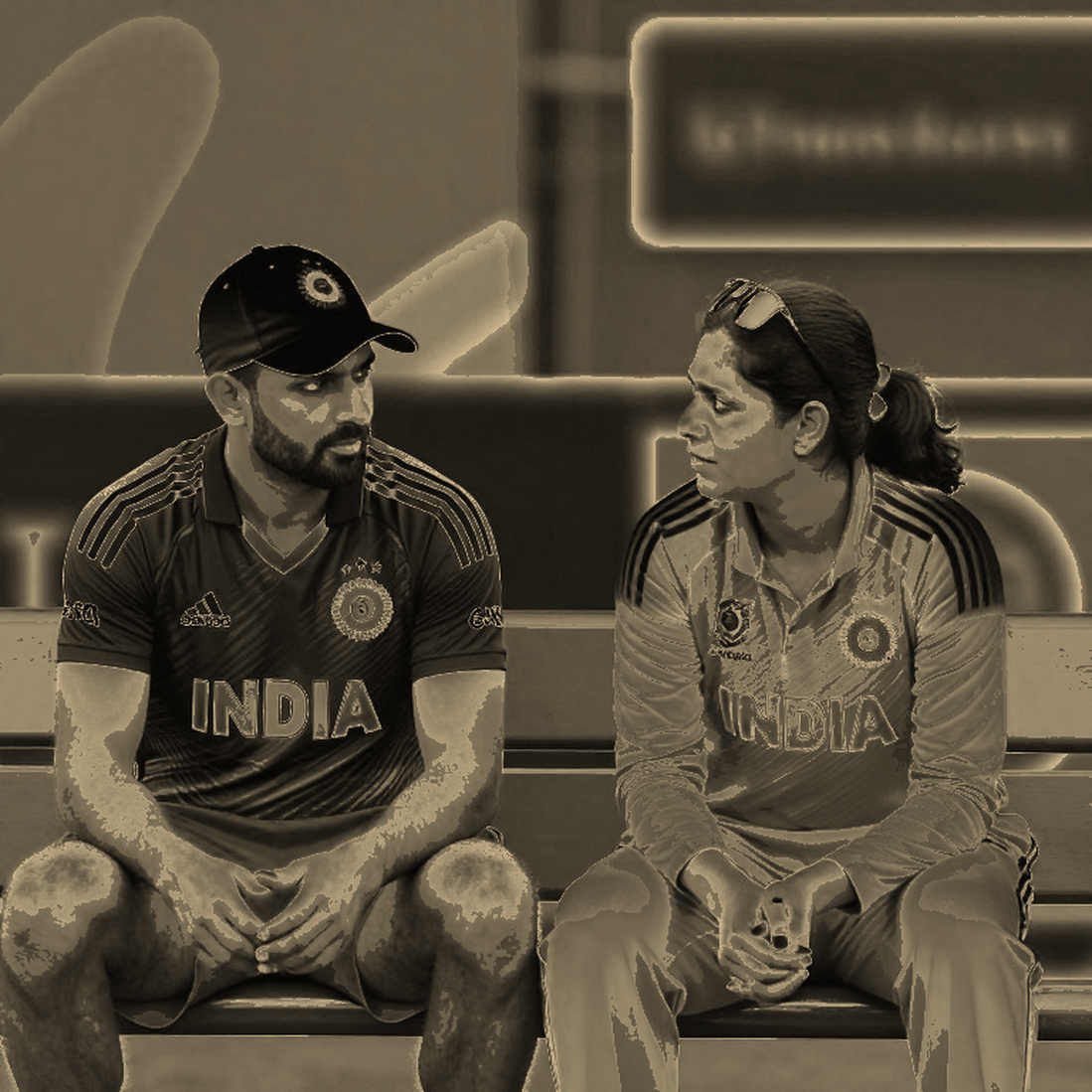
Two of those three names — Connor Williams and Jacob Martin — are former Baroda players. Ramesh Powar is from Mumbai. The geography of the candidate pool leans west, and because India's selection committee is built around zonal representation, that is not accidental. But it raises a question worth sitting with: were these men competing for the same zonal seat, or for one open position? Zonal seats are not interchangeable, and who was interviewed tells us very little about who could actually have won.
The headline and the body of the report do not describe the same job, and that mismatch is the real signal. The headline frames Powar as replacing Ajit Agarkar, which is a chairman-level position. The body places him on a panel headed by Pragyan Ojha on an interim basis. Those two statements only reconcile if the chairman's chair has gone vacant and is currently filled on a caretaker basis. Read that way, we are looking at three simultaneous gaps rather than one replacement: an acting chair, at least one unsettled new member, and an unresolved junior committee chairmanship. Dodda Ganesh's name has been attached to the junior role, and it now looks uncertain.
The most consequential word in the report is co-opted. Powar reportedly interviewed for the junior panel, was considered for a chairmanship, and then entered the senior panel by co-option. Co-option is a legitimate board power, but it is not a competitive appointment — it sits outside the advertised process. Names fade within weeks; precedents do not. That a senior selector can arrive by co-option rather than by winning a vacancy is a transparency weak point, and it should be recorded now rather than discovered later.
It is worth being precise about capability. Playing record and selection judgment are different skills. Powar played two Tests and thirty-one one-day internationals. Some will read the thin red-ball portfolio as a competence verdict. The logic runs both ways: a two-Test career is not evidence of weak judgment, just as a hundred-Test career would not guarantee strong judgment. Selection is scouting, communication and squad balance, largely orthogonal to bowling averages. What does matter is the panel's collective feel for the longest format, where technique, five-day workload and session-by-session attrition are hardest to substitute. A panel weighted toward white-ball experience may reasonably lean on its analytics staff and coaching group for red-ball calls. That is not a failure; it is a boundary, and it is better known than ignored.
There is also the matter of how we learned all this. A named shortlist circulating within twenty-four hours of interviews means a leak close to the secretariat. Three unsuccessful candidates were publicly identified while the successful one is not yet formally confirmed. The cost falls on individuals, and the accountability belongs to the system.
The dominant risk is not the wrong selector. It is an unclear selector. An interim chair and a co-opted member constitute a panel with reduced institutional standing at precisely the moment it may need to make unpopular calls — phasing out a senior player, setting workload blocks, resolving captaincy. Interim chairs typically have less capacity to force contested decisions, which pushes hard calls toward the head coach and captain. That may be fine, but it should be a design choice, not a by-product of ambiguity.
One boundary worth naming, because it is structural rather than specific to this report: selector appointments in India carry high public salience, and candidates with active media roles raise conflict-of-interest questions that the post-Lodha framework expects to be declared in advance, not audited afterwards. A clean profile and a loud profile are different propositions, and the board should say which it is choosing.

Consider the calendar. If interviews took place on October 15, this turnover lands within months of a home T20 World Cup. A new panel naming its first major squad at a home global event is both an opportunity and a continuity risk, and continuity begins with clarity of authority.
What we are watching, then, is a process story wearing a personnel story's clothes. The open questions are not about one man. They concern who chairs the panel, who runs the junior committee, and how far the co-option precedent will stretch. Selector controversy is old news in Indian administration. What is new is that the argument has begun before the announcement.
When the formal list arrives, we will read the names and rank them. The real verdict comes later, when we see whether this panel can hold a difficult line. The question is not who sits in the chair. The question is who can stand in it.